Gemini 3.5 Pro Delayed: Can Google Still Keep Up?
Google was expected to launch Gemini 3.5 Pro in June 2026. The model has now slipped to July, just as pressure rises around Google: OpenAI and Anthropic competition, high-profile researcher departures, market reaction and the battle for AI agents. Here is what the delay really changes for users, developers and Google's AI credibility.
⚡ In 30 seconds
Google has delayed Gemini 3.5 Pro from June to July 2026. The model was expected to become Google's next major answer to OpenAI and Anthropic on long-context reasoning, advanced coding and agentic workflows. Instead, Google is buying a few extra weeks of testing while losing momentum at an awkward time.
The delay is not dramatic by itself. Frontier models often slip by days or weeks. What makes this one matter is the context: high-profile researcher departures, pressure in AI coding, market anxiety around Google's talent retention, and constant comparison with Claude, ChatGPT and the new generation of agents.
In plain English: Gemini 3.5 Pro is not just a product launch. It is a credibility test for Google in the AI-agent race.
The Neuriflux Verdict
Google is not losing the AI race because Gemini 3.5 Pro slipped by a few weeks. The company still has huge advantages: infrastructure, distribution, Search, Android, Workspace, Google Cloud, DeepMind and global reach.
But the timing is difficult. OpenAI still dominates consumer adoption. Anthropic is gaining credibility among professional users and developers. And Google must show that Gemini 3.5 Pro is not only impressive on paper, but genuinely competitive on long-horizon tasks, coding and agents.
🟢 What changes The delay gives Google more time to incorporate tester feedback, improve model performance and avoid a fragile launch.
🟠 The sensitive point Timing. A short delay becomes more meaningful when it lands alongside talent departures and rising competitive pressure.
Our recommendation Do not wait for Gemini 3.5 Pro for everyday use cases. Gemini 3.5 Flash is already available and covers many needs. Watch Pro closely if your work depends on long context, advanced reasoning, complex coding or multi-step agents.
Final verdict: caution, not panic. The delay is manageable, but July is now strategically important for Google.
📊 Neuriflux Score: 8.6/10
This score does not judge Gemini 3.5 Pro as a final model, because it is not broadly available yet. It evaluates the quality of the current sequence: delay, communication, competitive pressure, user impact, product credibility and technical potential.
| Criterion | Weight | Score | Neuriflux reading |
|---|---|---|---|
| Immediate user impact | 20% | 7.8/10 | The delay mostly affects advanced users. Everyday use cases are already covered by Gemini 3.5 Flash, Claude and ChatGPT. |
| Timeline credibility | 20% | 7.0/10 | Google signaled a June launch. A short delay is acceptable, but confidence weakens when communication stays vague. |
| Competitive pressure | 20% | 8.8/10 | OpenAI, Anthropic and coding tools are moving fast. Google cannot afford a merely decent Pro launch. |
| Technical potential | 25% | 9.2/10 | If the model delivers on long context, reasoning and agents, it could still become a serious reference point. |
| Narrative risk | 15% | 8.2/10 | The delay lands alongside talent departures and market reaction. The main risk is reputational as much as technical. |
Why not 9/10? Because part of the promise still needs verification: real availability, cost, stability on long tasks, agentic quality and official communication.
🗓️ Timeline at a glance
| Date | Event | Neuriflux reading |
|---|---|---|
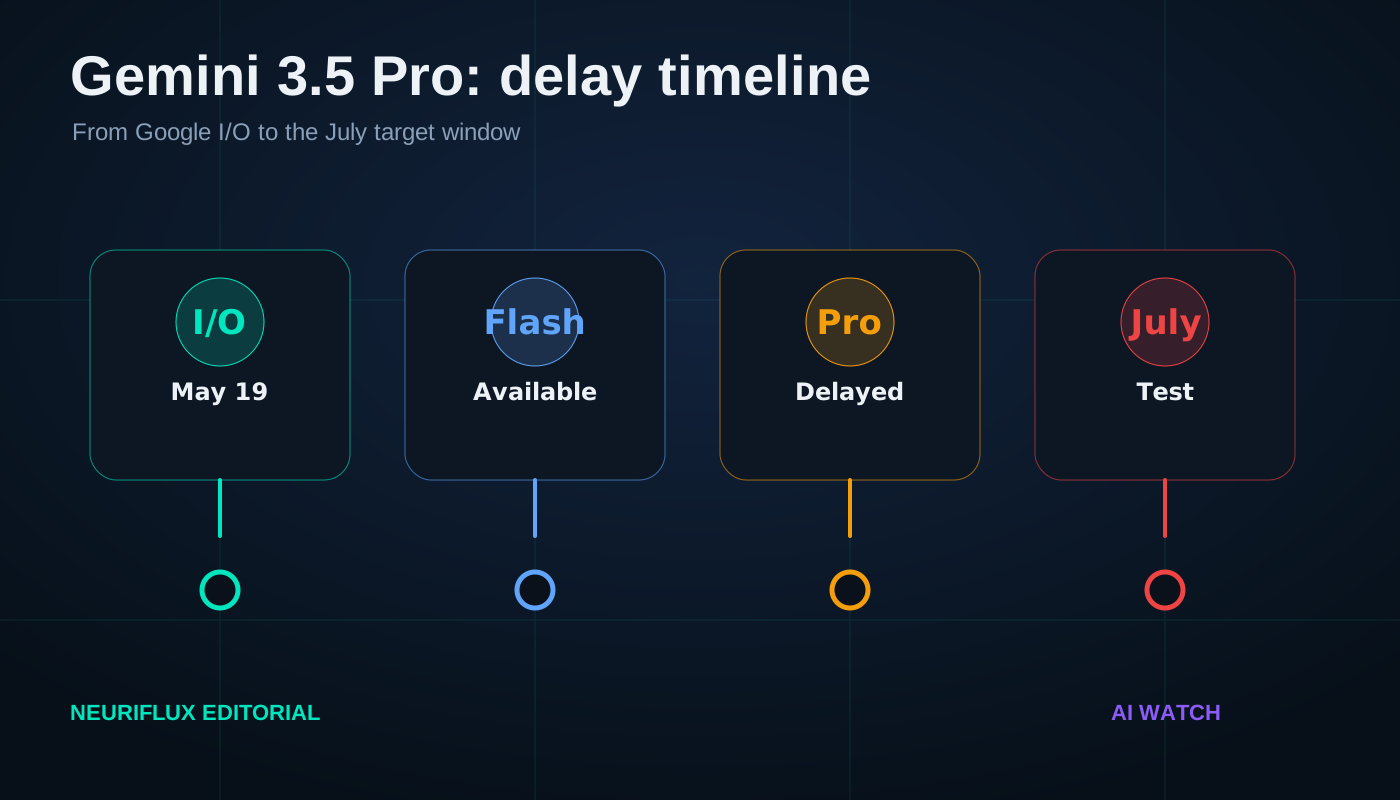
| May 19, 2026 | Google presents Gemini 3.5 at I/O. | Flash launches, while Pro is described as coming the following month. |
| June 2026 | Gemini 3.5 Flash becomes available. | Google shows progress on agents and coding, but Pro remains awaited. |
| Late June 2026 | Gemini 3.5 Pro is still not public. | The delay becomes visible and fuels comparisons with OpenAI and Anthropic. |
| July 2026 | Google now targets a Pro release window. | The date becomes a credibility test, not just a product milestone. |
What officially happened
At Google I/O 2026, Google introduced Gemini 3.5 as a model family built for action, agentic workflows and coding tasks. Gemini 3.5 Flash was announced as available immediately, while Google said it was still working on Gemini 3.5 Pro and expected to roll it out the following month.
June passed without a public Gemini 3.5 Pro release. According to Business Insider, Google is now targeting July 2026 for general availability while it incorporates more feedback from early testers and improves the model before a wider launch.
On paper, a few weeks of delay is not unusual. In frontier AI, calendars move all the time. But this delay arrives exactly when Google needs to prove it can keep up with OpenAI and Anthropic on the tasks that matter most in 2026: coding, agents, long context, tools and multi-step reasoning.
> Key takeaway > The issue is not only the date. The signal is that Google would rather delay than launch a Pro model that may not be ready for the agentic workloads it is supposed to handle.
Why the timing is bad for Google
The Gemini 3.5 Pro delay does not arrive in a vacuum. It lands in a period where the AI industry is extremely sensitive to three things: release speed, talent retention and credibility in professional use cases.
Google has historically invented or supported many of the foundations of modern AI. The Transformer architecture emerged from Google researchers. DeepMind produced AlphaFold, one of the most impressive scientific achievements in AI. On paper, Google has every reason to remain central.
But in generative AI, perception matters almost as much as raw capability. When OpenAI ships fast, Anthropic gains credibility in coding, and Claude grows among professionals, every Google delay becomes more visible.
That is what makes this sequence delicate: a short delay can become a long signal if the market reads it as loss of pace.
Why Google says the model needs more time
The reported reasons are mostly technical and product-oriented.
First, early tester feedback. Gemini 3.5 Pro is expected to handle long, complex and agentic tasks. These are exactly the hardest workloads to stabilize: maintaining context, planning steps, calling tools, correcting mistakes and staying coherent over time.
Second, efficiency and cost. Business Insider reports that Google is also incorporating feedback from Gemini 3.5 Flash, including concerns around token consumption. For professional users, this matters a lot: a powerful model that is too expensive to run at scale can become hard to deploy.
Third, strategy. Google cannot launch Gemini 3.5 Pro as just a bigger chatbot. It needs to convince on agents, coding, long research and professional environments. If the model ships too early and disappoints, the reputational damage could be worse than a short delay.
> Method note > We separate three layers here: what comes directly from Google, what comes from business or tech reporting, and what is Neuriflux analysis. Availability and timeline details should be treated as evolving until Google publishes a final official date.
Gemini 3.5 Flash: what you can use already
The situation is not only negative for Google. Gemini 3.5 Flash is already available, and Google presents it as its strongest Flash model for agents and coding.
According to Google's official blog, 3.5 Flash is available in the Gemini app, AI Mode in Search, Google AI Studio, Android Studio, Google Antigravity, the Gemini API and Gemini Enterprise environments. Google also says Flash outperforms Gemini 3.1 Pro on several coding and agentic benchmarks while offering significantly higher output speed.
For most everyday needs, Flash is already enough: writing, summarization, research, productivity assistance, prototypes, simple workflows and everyday coding help.
Gemini 3.5 Pro mainly becomes relevant if you need:
- very long context;
- deeper multi-step reasoning;
- agents that use tools reliably over time.
What Gemini 3.5 Pro must get right
Gemini 3.5 Pro will not be judged as just another general model. It will be judged on whether it can support the next generation of AI products.
The first issue is long context. Users expect a model that can read large documents, understand whole codebases, maintain coherence across long sessions and avoid losing track during complex work.
The second issue is agentic reasoning. A good agent does not only answer. It plans, uses tools, observes results, corrects itself and tries again. This is where the difference between an impressive assistant and a genuinely useful agent becomes visible.
The third issue is real cost. A powerful model that is too expensive on long tasks can be difficult to integrate into SaaS products, internal workflows or large-scale agents.
The fourth issue is enterprise reliability. Google has a major advantage with Cloud, Workspace, Search, Android and professional integrations. But that advantage is not enough if the Pro model is not perceived as reliable against Claude and OpenAI.
Read next
These articles are the best follow-up to what you are reading.
The talent story behind the calendar
The Gemini 3.5 Pro delay would probably have received less attention if it had not landed alongside a visible wave of talent moves.
Business Insider reported that Noam Shazeer, a major AI figure at Google, is leaving for OpenAI. Shazeer is known for his role in the Transformer story and for Character.AI. Other media also reported the departure of important Google DeepMind profiles, including John Jumper, associated with AlphaFold, toward Anthropic.
This needs nuance: Google DeepMind is not defined by a few names, however prestigious. The organization still has enormous research depth. But in an industry where a small number of researchers can shift the center of gravity of a lab, these departures are watched extremely closely.
The question is therefore not only whether Gemini 3.5 Pro ships in July.
The real question is: does Google still have the speed, talent and coherence to stay at the frontier?
The market reaction: why investors cared
The market reaction shows that this story goes beyond a product schedule. MarketWatch and Barron's reported a sharp Alphabet selloff around this sequence, with a large market-cap loss tied to concerns about AI competition and talent departures.
The market is not reacting only to a delay. It is reacting to a narrative. In June 2026, that narrative was not favorable to Google: a delayed Pro model, visible researchers leaving, and competitors appearing to gain ground in agents and coding.
That does not mean Google is in immediate danger. It means investors now treat AI momentum as a central indicator of Google's ability to defend future growth.
Google vs OpenAI and Anthropic
The current competition is not only a benchmark race. It is an ecosystem race.
OpenAI still has a massive lead in consumer adoption. According to TechCrunch, citing Sensor Tower data, ChatGPT remained the largest AI assistant globally in May 2026, ahead of Gemini and Claude. But the gap is narrowing: Gemini benefits from Google's ecosystem, while Claude is growing quickly among some professional and high-intent users.
Google has a unique advantage: Gemini can be integrated into Search, Android, Workspace, Gmail, Docs, Drive, Cloud and developer environments. No other player has exactly that distribution surface.
But distribution does not automatically win every professional use case. To become a reference for AI agents, Gemini 3.5 Pro must also win on raw quality: reasoning, coding, tools, reliability, cost and long context.
Should you actually worry about Google?
The honest answer is nuanced.
No, Google is not collapsing. The company has enormous resources, a huge user base, a strong cloud business, a major research lab and a distribution engine competitors can hardly replicate.
But this is not a non-event either. In a race moving this quickly, a few weeks of delay can become symbolic when added to other weak signals: departures, competitive pressure, unclear communication and high expectations.
Our read is simple: Google has not lost the battle. But Gemini 3.5 Pro needs to land well, because the margin for error has narrowed.
What this changes for you now
For everyday users, the delay changes very little. Gemini 3.5 Flash, ChatGPT, Claude, Perplexity and other tools already cover most needs: search, writing, summarization, basic analysis, coding help and productivity.
For developers, the advice is different: do not build your product roadmap around an unconfirmed release date. Test Flash if you are in the Google ecosystem, compare it with Claude and OpenAI, and keep your integrations modular enough to switch models if needed.
For companies, the right approach is a portfolio mindset: use Gemini where Google integration is strongest, Claude where long reasoning or coding works better, and OpenAI where your stack already depends on its tooling.
The real winner in 2026 is not necessarily the team that chooses one model forever. It is the team that stays flexible enough to use the right model in the right place.
FAQ
Is Gemini 3.5 Pro available? Not in broad general availability at the time of this rewrite. Google is targeting July 2026 according to Business Insider, but it has not publicly confirmed a precise date.
Why was Gemini 3.5 Pro delayed? Google is taking more time to incorporate early tester feedback and improve the model, especially around long, agentic and potentially token-heavy tasks.
Is Gemini 3.5 Flash enough for now? Yes for most use cases. Flash is already available and designed for speed, coding, lightweight agents and everyday use.
What is the difference between Flash and Pro? Flash prioritizes speed and cost. Pro is expected to target deeper reasoning, stronger long-context performance and more ambitious agentic capabilities.
Is Google falling behind OpenAI and Anthropic? Not everywhere. Google still has massive distribution and infrastructure. But in coding, agents and release momentum, the pressure is real.
Should I wait for Gemini 3.5 Pro before choosing an AI model? Only if your use case truly depends on long context or advanced agentic work. Otherwise, already-available models are more than enough.
Conclusion
The Gemini 3.5 Pro delay is not a catastrophe. But it is revealing.
It shows that the AI competition of 2026 is no longer only about model power. It is about release speed, stability, trust, talent, costs, useful agents and the narrative around every launch.
Google still has enormous advantages. Gemini 3.5 Flash is already available. The Google ecosystem remains one of the most powerful distribution machines in the world. And if Gemini 3.5 Pro delivers, this delay will likely be forgotten quickly.
But if the model disappoints, the interpretation will be much harsher: the delay will no longer look like prudence, but like a symptom.
Our verdict: Gemini 3.5 Pro is still an opportunity for Google. But July 2026 is no longer just a release window. It is a confidence test.
Read next on Neuriflux
- Gemini 3.5 Flash full review: to understand what the currently available model really delivers.
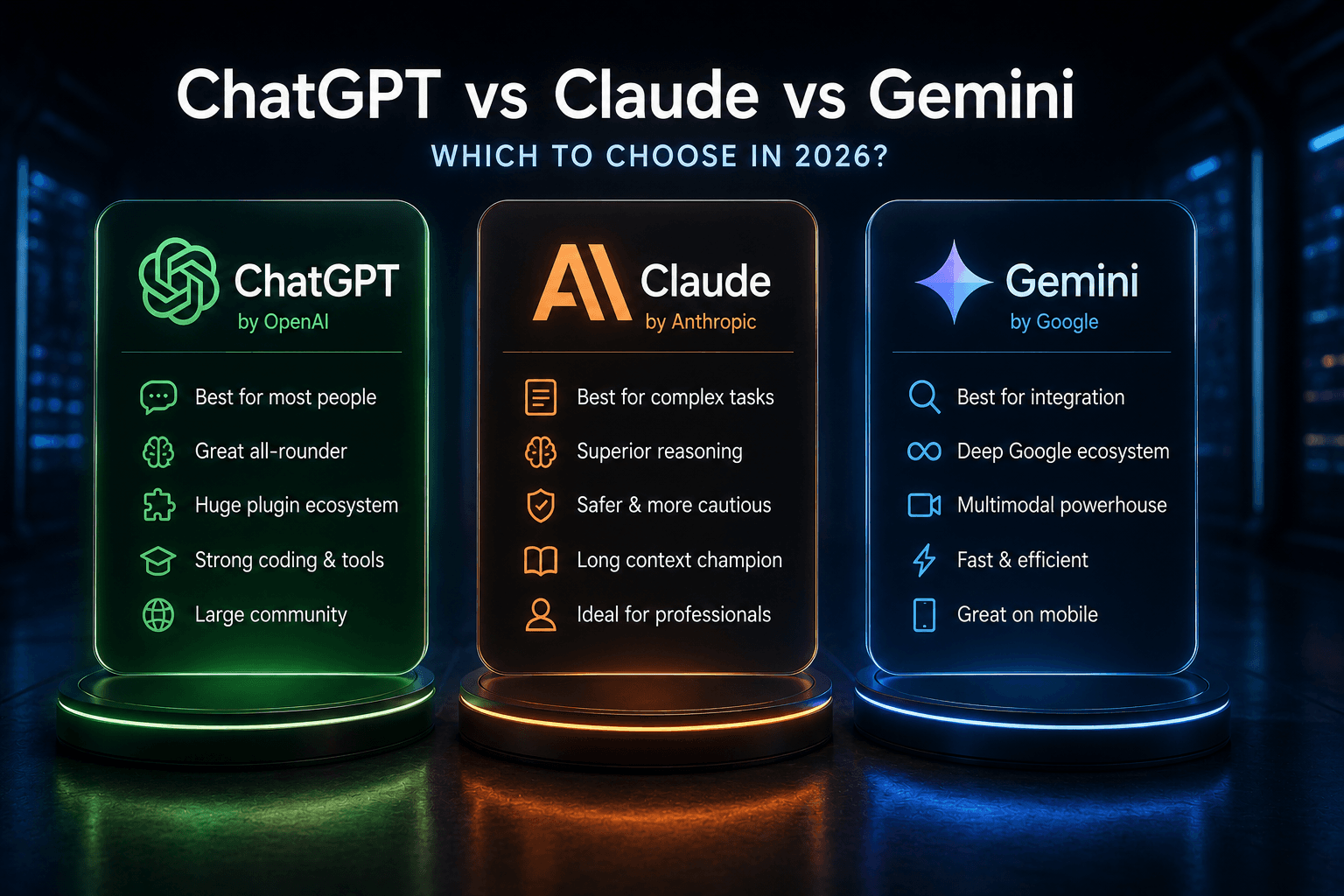
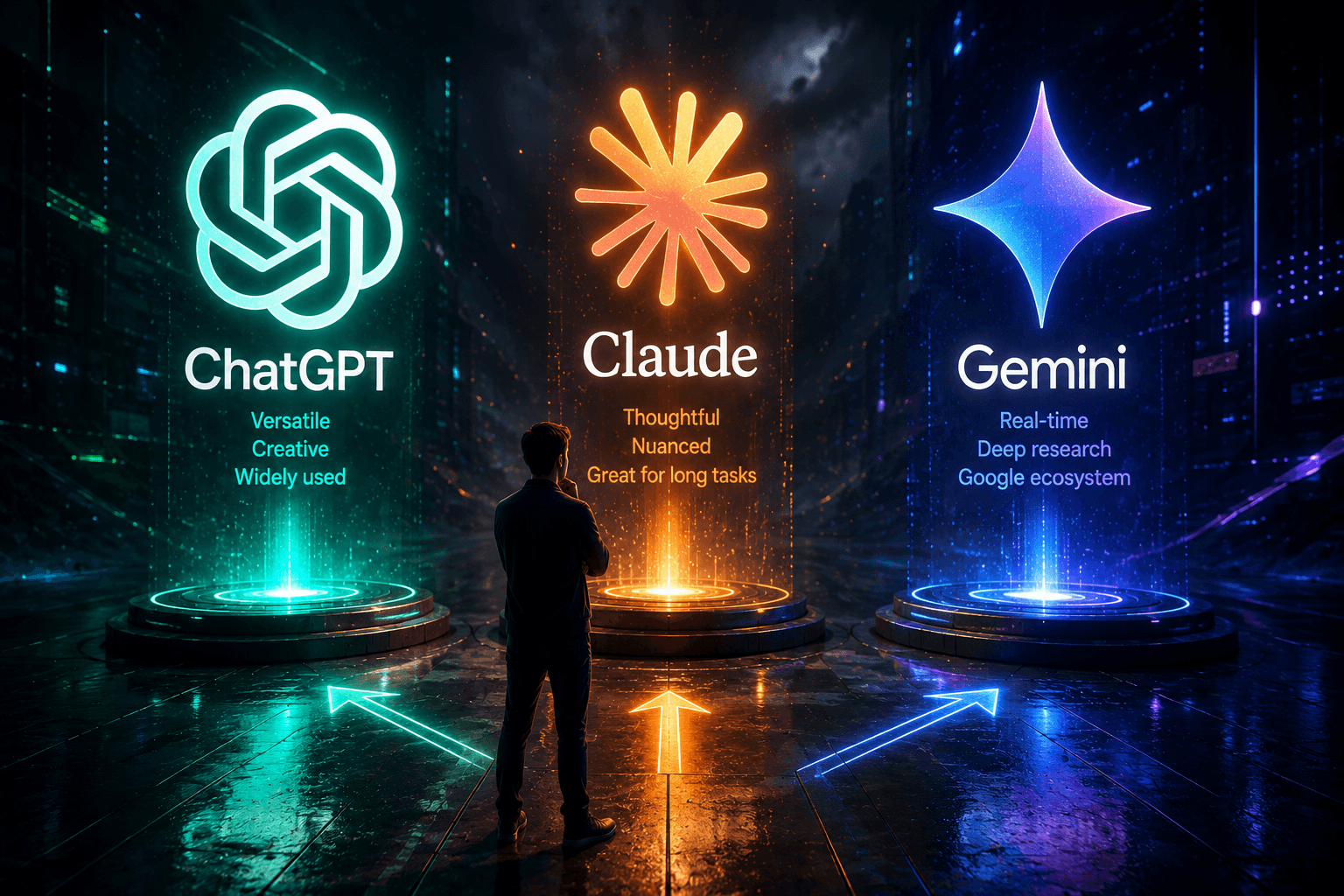
- ChatGPT vs Claude vs Gemini: to compare the three major AI assistants.
- The best AI agents in 2026: to see where Gemini can still gain ground.
Sources and references
- Google Blog — I/O 2026: Welcome to the agentic Gemini era
- Google Cloud — Innovations from Google I/O 26 on Google Cloud
- Business Insider — Google delays Gemini 3.5 Pro launch to July
- Business Insider — Google just lost one of its biggest AI names to OpenAI
- Reuters — John Jumper to leave Google DeepMind for Anthropic
- MarketWatch — Alphabet market-cap wipeout amid AI talent concerns
- Sensor Tower — State of AI 2026
- TechCrunch — ChatGPT's market share slips below 50%
Editorial verification date: July 8, 2026.
Method and reliability
This article is designed as a living resource. Prices, features, and market positions can change quickly in AI; when a detail depends directly on a vendor, plan, or recent announcement, always check the official page before making a final decision.
Last editorial check: July 8, 2026.
 97% match97% match
 88% match
 97% match
 85% match
 93% match
 84% match
 85% match
 95% match
 87% match
 91% match
 88% match
 85% match
 88% match
 85% match