The AI browser war: why Chrome, Atlas and Comet are changing the web
OpenAI is pushing ChatGPT Atlas, Perplexity is accelerating with Comet, and Google is embedding Gemini into Chrome and AI Mode. The real battle is not just about browsers: it is about who controls the layer between users and the web.
⚡ In 30 seconds
The next major AI war is no longer only happening inside chatbots. It is happening inside the browser. OpenAI launched ChatGPT Atlas, Perplexity is pushing Comet, Google is embedding Gemini into Chrome, and AI Mode is changing how people search.
The browser matters because it is where users read, search, compare, buy, work and make decisions. If AI can understand open pages, summarize sources, compare options and execute tasks, it is no longer just answering. It becomes an action layer on top of the web.
In plain English: the AI browser is becoming the execution environment for agents.
The Neuriflux Verdict
This war matters more than the classic chatbot battle because it touches web distribution directly.
🟢 What really changes The browser is no longer only a window to the internet. It becomes a permanent assistant that can read pages, understand context, act on websites and reduce the number of clicks needed.
🟠 The sensitive point The web economy may be disrupted. If AI browsers summarize content before users click, publishers, blogs, media companies and SaaS businesses dependent on organic traffic will have to adapt.
🔴 The main risk The more a browser understands your context, the more sensitive data it concentrates: pages, purchases, messages, forms, documents, searches and intent. Convenience rises, but so does privacy risk.
Final verdict: the AI browser war is a battle to control the main interface of the web.
📊 Neuriflux Score: how important is this battle?
| Criterion | Score | Why it matters |
|---|---|---|
| Strategic impact | 9.7/10 | Whoever controls the browser controls a decisive layer of web access. |
| User impact | 9.2/10 | Summarizing, comparing and acting inside pages can change daily habits. |
| SEO impact | 9.4/10 | Organic clicks become less guaranteed when AI answers before the visit. |
| Product maturity | 7.4/10 | Atlas, Comet and Gemini in Chrome are advancing fast, but use cases are still young. |
| Privacy risk | 8.8/10 | The browser is one of the most sensitive spaces in digital life. |
| Publisher risk | 9.0/10 | Content can be read, summarized and redistributed without a direct visit. |
Final Neuriflux Score: 9.1/10
Neuriflux reading: this war is not won yet, but it is already essential. AI browsers could become as structurally important for AI as Chrome was for the modern web.
How we prepared this analysis
We cross-checked official announcements from OpenAI, Google and Perplexity, information about ChatGPT Atlas, Comet, Gemini in Chrome and AI Mode, as well as public research on generative AI search, browser agents, privacy and website visibility.
The goal is not to declare a winner. The goal is to explain why this layer is becoming strategic and why creators, developers, publishers and users should watch it closely.
The next AI war is no longer happening only inside chatbots
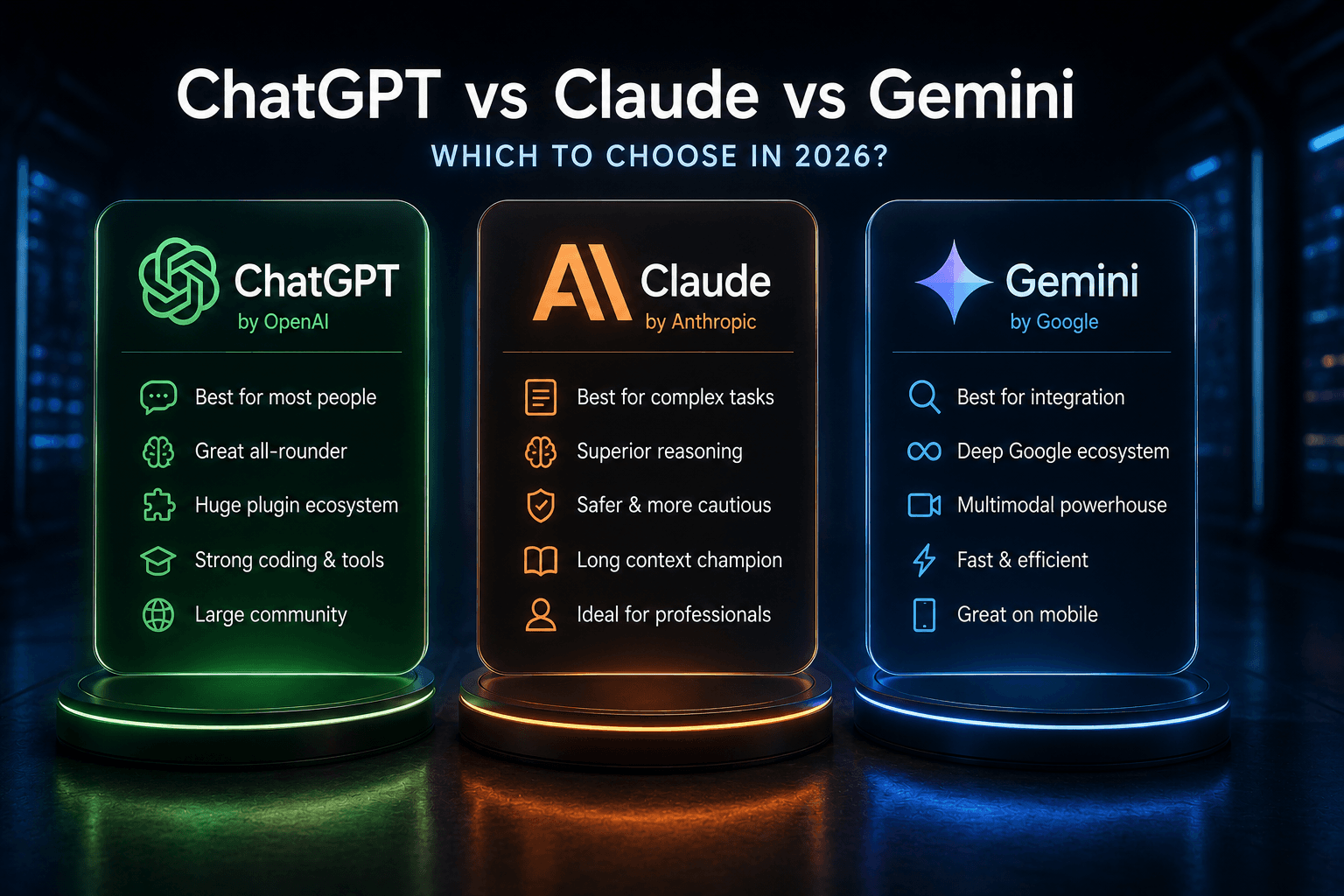
For almost two years, the industry watched the same arena: ChatGPT vs Claude vs Gemini. Which one answers better? Which one codes better? Which one reasons better? Which one has the largest context?
But another battle is forming.
It is not only about models. It is about the place where models meet the web: the browser.
That makes sense. The browser is the central interface of digital life. It is where we search, read, buy, compare, book, learn and manage work.
If AI moves there, it stops being a tool you open. It becomes a persistent layer above the internet.
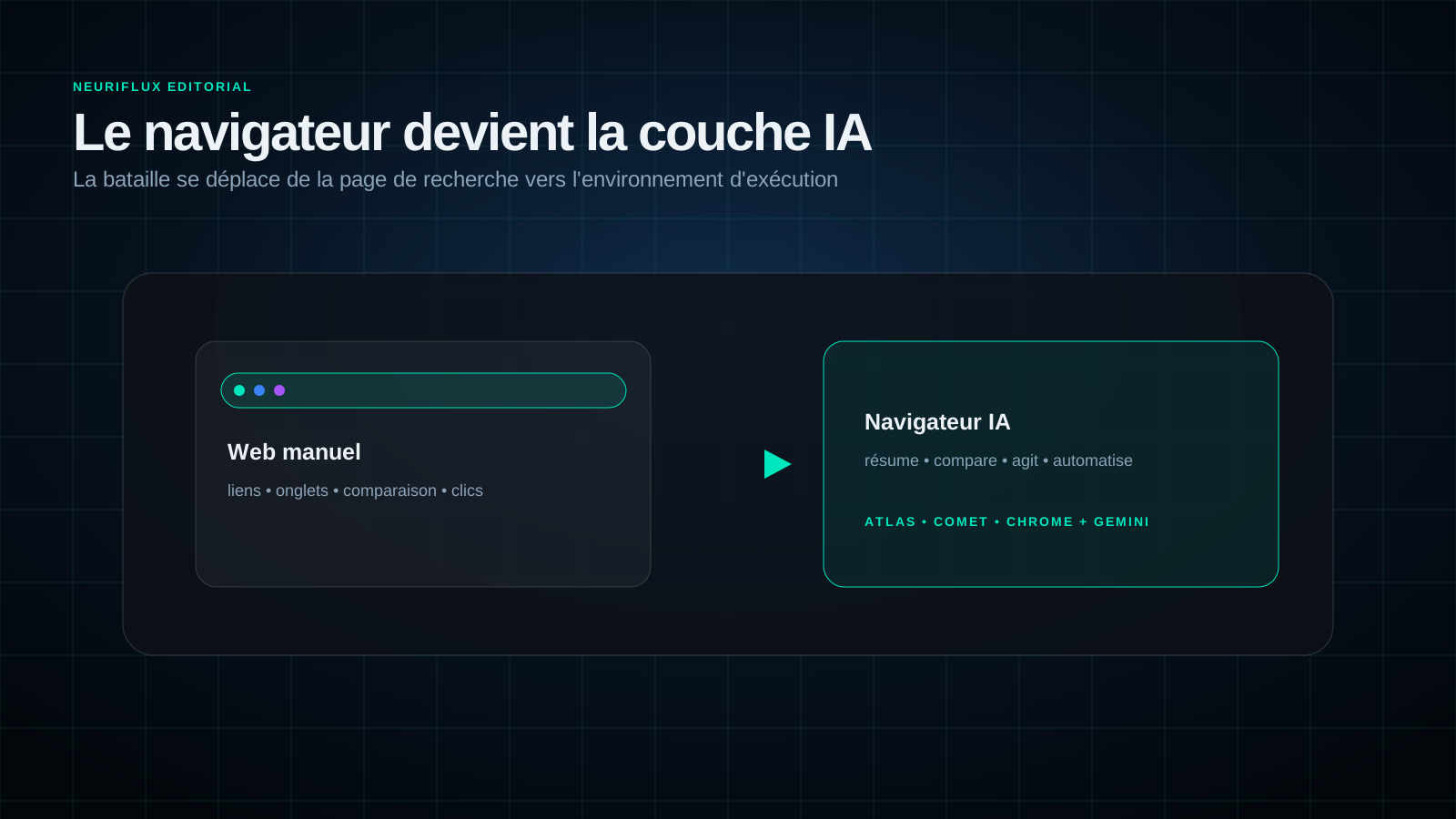
Google, OpenAI and Perplexity are targeting the same strategic layer
Google, OpenAI and Perplexity have different histories, but their trajectories now converge.
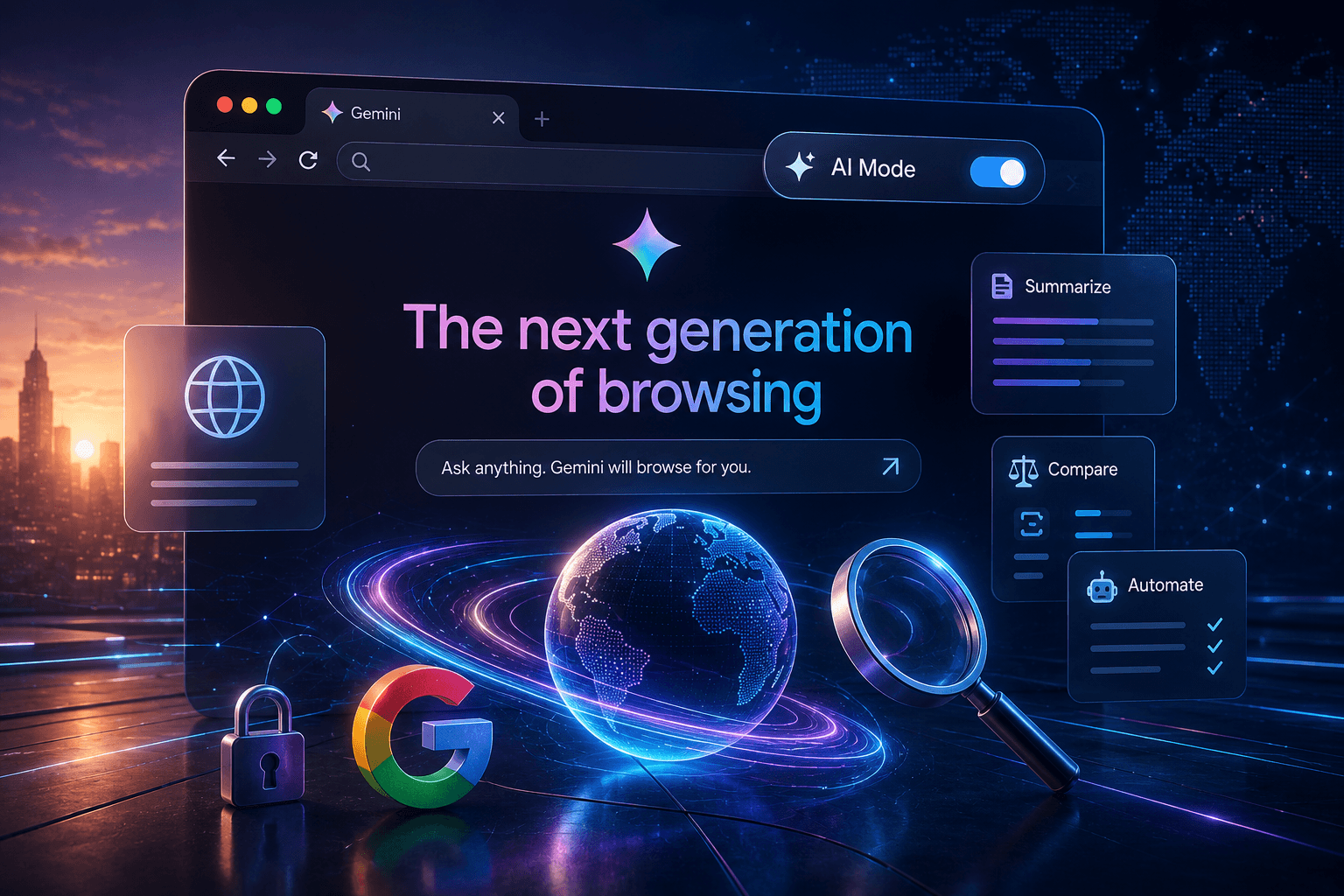
Google wants to defend Search and Chrome by integrating Gemini and AI Mode. The objective is clear: keep users inside the Google environment while transforming classic search into a conversational and multimodal experience.
OpenAI is pushing ChatGPT Atlas, a browser built around ChatGPT. The idea is not merely adding a chatbot sidebar. The goal is placing ChatGPT into the browsing flow itself: summarizing pages, comparing products, analyzing data, helping users write and gradually executing tasks.
Perplexity is pushing Comet, an AI browser designed around research, contextual assistance and agents. Perplexity no longer wants only to answer your questions. It wants to become the interface through which you explore the web.
Three strategies. One objective: control the access layer to the internet.
Why the browser is becoming more important than the chatbot
A traditional chatbot sits apart from the web. You open it, ask a question, maybe paste a URL, then return to your browsing.
An AI browser reverses that logic.
It sees the page. It understands context. It can follow your tabs. It can summarize what you read, compare sources, extract data, find information in a document, fill a form or trigger an action with your approval.
That is no longer just a conversation. It is an action interface.
The browser becomes strategic because it moves AI closer to the exact moment when users make decisions.
Chrome and Gemini: Google is defending its historical territory
Google understands the danger better than anyone. For more than twenty years, its power on the web came from Search and Chrome.
Traditional search follows a simple mechanism: users type a query, Google shows links, websites receive traffic, and Google monetizes attention.
Conversational AI weakens that model. When an answer is generated directly in the interface, the need to click decreases. When AI Mode can synthesize several pages, users may spend less time on source websites. When Gemini is built into Chrome, Google can reinvent search without abandoning its browser.
Google's strategy is defensive and offensive at the same time: defend Search, strengthen Chrome, integrate Gemini and prevent a new actor from becoming the primary gateway to the web.
ChatGPT Atlas: OpenAI wants to enter real browsing
ChatGPT Atlas is a strong signal. OpenAI no longer wants to be only a destination opened in a tab. It wants to accompany users while they browse.
Atlas places ChatGPT at the center of the browser. The assistant can help from a page, summarize content, compare information, analyze a website and keep browsing context depending on the user's settings.
The direction is obvious: if ChatGPT becomes a permanent web companion, OpenAI reduces its dependence on Google and gets closer to real user behavior.
That may be one of OpenAI's most strategic moves since ChatGPT itself.
Perplexity Comet: the answer engine becomes a browser
Perplexity was long described as an answer engine with sources. Comet shows a broader ambition: turning browsing into an AI-native experience.
Where Google organizes the web around links, Perplexity tries to organize it around answers, summarized sources, tasks and context. The goal is not simply to display a page. It is to reduce cognitive friction: fewer tabs, less manual comparison, less repetitive searching.
That is exactly what makes Comet dangerous for incumbents. It is not trying to improve traditional search. It is trying to replace it with a more direct flow.
Read next
These articles are the best follow-up to what you are reading.
What this could change for SEO
This is one of the most important points for Neuriflux.
Classic SEO is about visibility in Google and clicks to a page. AI browsers shift the value. Tomorrow, ranking may not be enough. A site will also need to be understood, cited, summarized accurately and considered reliable by assistants.
Weak content may lose a lot of value. Similar generic articles are easy to absorb, summarize and replace. Strong editorial brands, original data, transparent methods and credible sources may become more important.
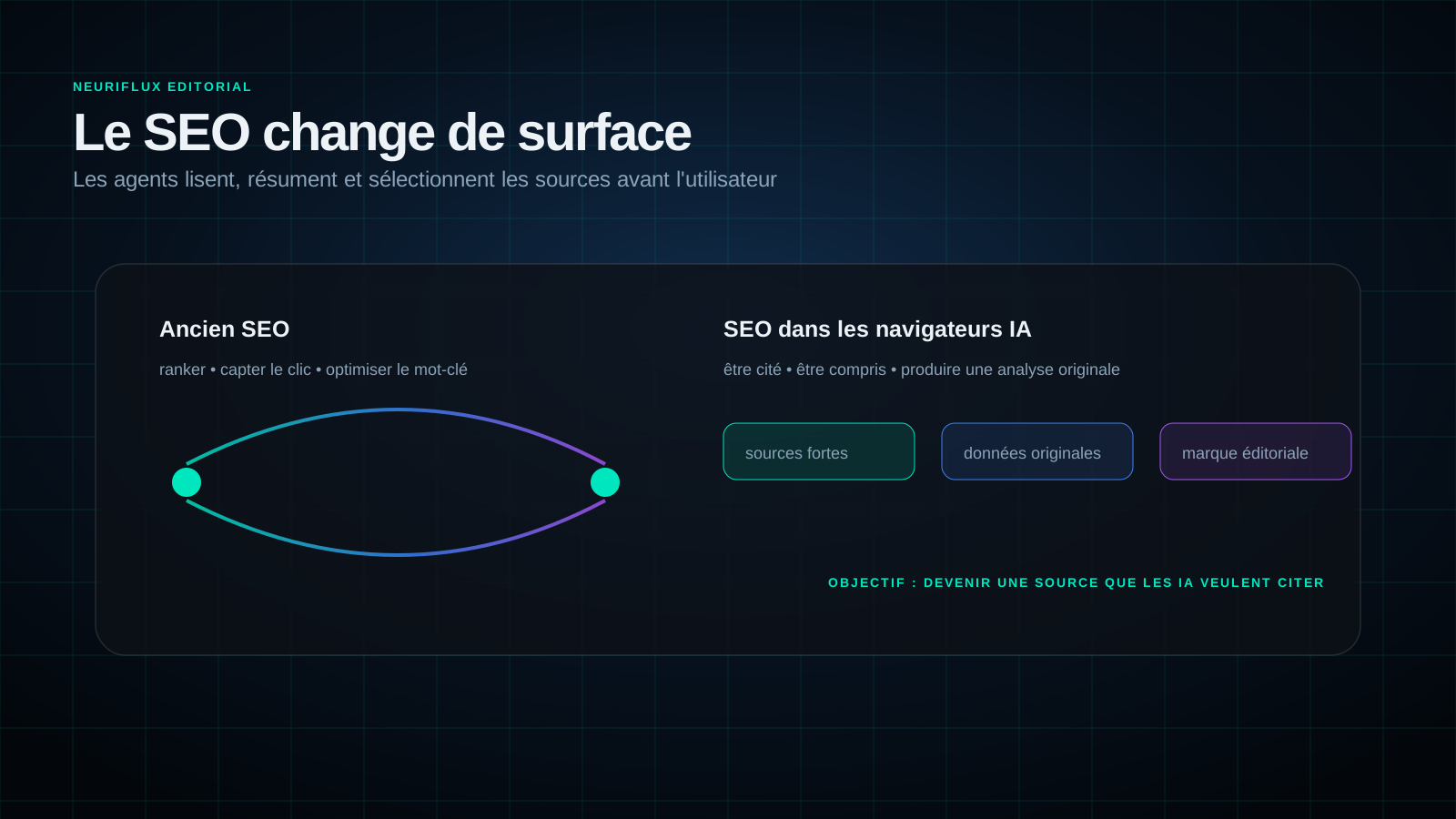
Neuriflux reading: the future of SEO will not only be "rank first on Google." It will also be "become a source clear, reliable and original enough for AI to cite."
What this changes for users
For users, the benefit is obvious: fewer tabs, less copy-paste, less repetitive searching, more contextual help.
But the potential cost is just as obvious: more data entrusted to the browser, more dependence on an AI layer, more decisions influenced by an assistant whose criteria are not always transparent.
An AI browser can save time. It can also steer choices, filter sources and summarize the web through its own logic.
The key issue will not only be performance. It will be transparency: which sources are used, which data is remembered, which actions are allowed and how the user stays in control.
The risks to take seriously
The browser is one of the most sensitive pieces of software in digital life. It sees searches, accounts, purchases, documents, forms, work tools and sometimes highly personal information.
Adding AI to this layer creates new risks.
| Risk | Why it matters |
|---|---|
| Privacy | The browser can see a huge amount of user context. |
| Prompt injection | A malicious page may try to influence the agent. |
| Unwanted actions | An agent that clicks or fills forms can create real mistakes. |
| Source bias | AI may prioritize some sources and ignore others. |
| Platform lock-in | Users may become dependent on one agent-browser. |
| Publisher impact | Content may be summarized without generating visits. |
Who can win this war?
Google has the distribution advantage: Chrome, Search, Android, Workspace. That is enormous.
OpenAI has the ChatGPT habit advantage: hundreds of millions of people already know how to talk to its assistant and may want to bring it everywhere.
Perplexity has the product-clarity advantage: its positioning around search, sources and AI-native navigation is extremely readable.
The winner will not necessarily be the company with the smartest model. It will probably be the one that best combines distribution, trust, daily usefulness and user control.
Our recommendation
For users: treat these browsers as productivity tools, not oracles. Ask for sources, verify important information and keep control over sensitive actions.
For content creators: stop producing generic SEO. Build a brand, cite sources, add original data, make your methods visible and give both AI systems and humans a reason to choose you.
For developers: watch APIs, extensions, browser agents and new automation surfaces. A meaningful part of tomorrow's software may live in this layer.
FAQ
What is an AI browser? A browser that integrates an assistant able to understand pages, summarize content, answer with page context and sometimes execute actions.
Is ChatGPT Atlas a real browser? Yes. OpenAI presents Atlas as a browser with ChatGPT built in, first available on macOS.
What is Perplexity Comet used for? Comet is an AI browser focused on research, source synthesis, tasks and contextual assistance.
Is Google turning Chrome into an AI browser? Yes. Google is integrating Gemini and AI Mode into Chrome to bring AI assistance directly into browsing.
Will AI browsers kill Google Search? Not necessarily. But they can reduce clicks, change how sources are selected and force Search to become more conversational.
Are AI browsers dangerous for SEO? They can be dangerous for generic sites. Strong editorial authority, original analysis and credible sources should become more valuable.
Should I use an AI browser now? Yes for testing, but carefully. Avoid sensitive actions without human approval and verify important information.
Conclusion
The AI browser war is just beginning, but it already reveals a deep shift: AI is leaving the chat window and entering the environment where people actually use the web.
This is a battle for search, SEO, publishers, user data, advertising, agents and daily productivity.
The browser is no longer just a window. It is becoming an intelligence layer.
In this new phase, the most important question may no longer be: which chatbot is best?
The real question becomes: who controls the interface between you and the internet?
Sources and references
- OpenAI — Introducing ChatGPT Atlas
- OpenAI — ChatGPT Atlas release notes
- Perplexity — Comet Browser
- Reuters — Perplexity launches Comet browser to take on Chrome
- Google — AI in Chrome
- Google — AI Mode in Chrome
- Google — New era for AI Search
- arXiv — How Generative AI Disrupts Search
- arXiv — PageGuide: browser extension for AI-assisted navigation
Read next on Neuriflux
- ChatGPT vs Claude vs Gemini to choose the right AI assistant.
- MCP explained simply to understand how agents connect to tools.
- Best AI agents in 2026 to see where this logic goes next.
Method and reliability
This article is designed as a living resource. Prices, features, and market positions can change quickly in AI; when a detail depends directly on a vendor, plan, or recent announcement, always check the official page before making a final decision.
Last editorial check: July 8, 2026.
 97% match
 88% match
 88% match
 93% match97% match
 84% match
 85% match
 95% match
 88% match
 85% match
 88% match
 97% match
 88% match
 87% match
 85% match