Anthropic Is Renting Elon Musk’s Datacenter: Why the AI War Is Becoming an Infrastructure War
Anthropic reportedly rented part of Elon Musk’s massive xAI datacenter to support Claude. Behind this story lies a much bigger shift: the future of AI may depend less on models and far more on GPUs, energy and infrastructure.

30-second takeaway
Neuriflux summary: Anthropic Is Renting Elon Musk’s Datacenter: Why the AI War Is Becoming an Infrastructure War — the real value depends on time saved, code quality, and whether it remains controllable inside a real project.
- Content type: Code · analysis.
- What you get: a fast read on use cases, limits, alternatives, and decision points.
- Quick verdict: Worth watching, but with caution: in AI, a big announcement should always be confirmed by real-world use.
- Editorial score: 8.8/10, adjusted to the topic instead of copied across articles.
The AI war is starting to move somewhere nobody expected
For months, the entire AI industry seemed obsessed with the exact same question: which model is the smartest?
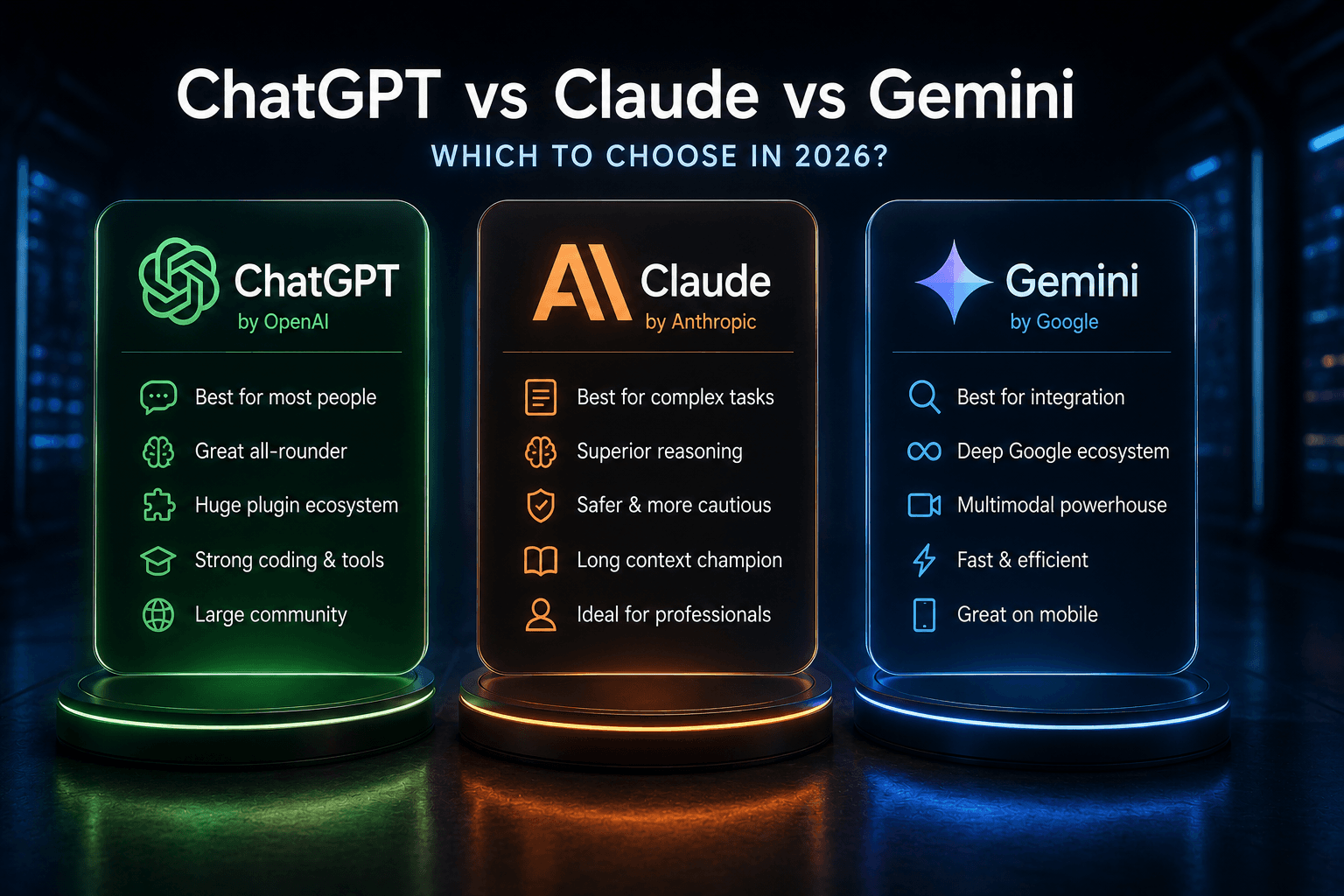
Every release triggered the same comparisons. GPT-4o was constantly measured against Claude, Gemini was trying to catch OpenAI, Grok became Elon Musk’s answer to the AI race, while newer players like DeepSeek shocked the industry with performance levels that looked impossible only months earlier.
But while everyone was focused on the models themselves, another battle quietly started to emerge behind the scenes.
And this one may end up being even more important.
According to multiple recent reports, Anthropic reportedly rented part of Elon Musk’s gigantic xAI datacenter in order to support the growing demand around Claude. At first glance, this sounds like a fairly technical business story. But in reality, it reveals one of the biggest shifts the AI industry has experienced since the arrival of ChatGPT.
Because the next AI war may no longer be fought only on intelligence.
It may increasingly be fought on infrastructure.
Behind every AI response sits an industrial-scale machine
When most people use ChatGPT or Claude, the experience feels incredibly simple. A text box, a few words typed on a keyboard, then an answer appears a few seconds later.
But that simplicity is almost deceptive.
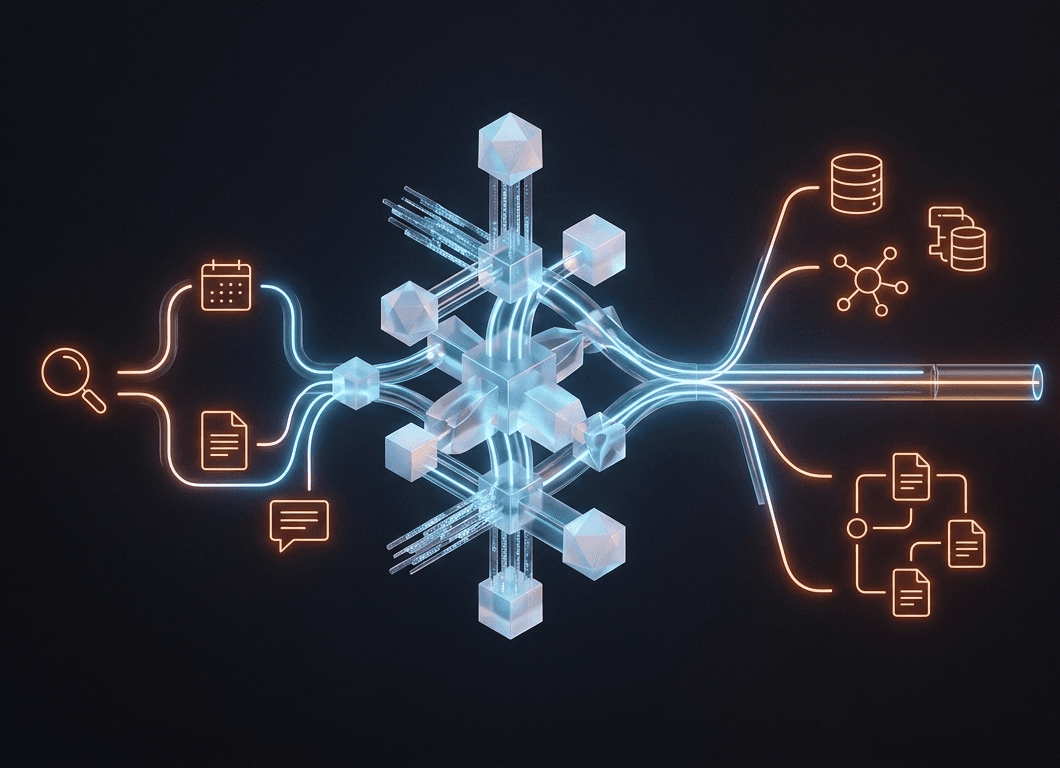
Behind every single prompt now sits an enormous industrial system. Thousands of GPUs run continuously inside specialized datacenters cooled almost like energy facilities. What the public experiences as a simple conversation actually depends on a massive amount of compute power and electricity.
For a long time, this invisible layer was secondary. The main objective was simply building models impressive enough to attract users.
That is no longer enough.
Because modern AI systems are no longer limited to answering short questions. They analyze large projects, review entire codebases, automate workflows, generate complex outputs and increasingly behave like real digital workers.
And that transition is exactly what is causing infrastructure demand to explode.
Claude perfectly represents this new phase of AI
Claude’s recent growth is not only tied to benchmark performance. The model became especially popular among developers and advanced users because it performs extremely well on long and complex workflows.
Users are no longer simply asking: “answer this question.”
They now ask AI systems to: analyze entire projects, keep context in memory, work across multiple files, reason step by step, review architecture decisions, automate repetitive workflows.
And the more capable models become at handling those extended interactions, the more expensive they become to operate.
A short conversation remains relatively cheap. A system capable of reasoning for several minutes, retaining memory and executing multiple workflow steps becomes dramatically heavier at scale.
That is likely one reason Anthropic is aggressively securing more compute infrastructure.
This is where the real problem begins
For a long time, competitive advantage seemed straightforward: build the best possible model.
But the industry is slowly realizing that even the smartest model becomes useless if the infrastructure behind it cannot keep up.
AI companies are now racing to secure GPUs, cloud partnerships, electricity access, datacenters and networking capacity capable of supporting millions of simultaneous users.
In other words, the AI race is starting to look much more like an industrial competition than a traditional software battle.
And that changes the economics of the entire sector.
Nvidia is quietly becoming the invisible core of AI
It is almost impossible to discuss this shift without mentioning Nvidia.
Today, an enormous portion of the AI ecosystem depends directly or indirectly on Nvidia GPUs. OpenAI relies on that compute power. Anthropic does too. Google operates massive GPU infrastructure. xAI is building gigantic clusters around the same hardware. Even most AI startups ultimately depend on this supply chain.
That level of dependency turns Nvidia into one of the most strategic companies in the industry.
Because ultimately, it does not matter how intelligent a model is if the infrastructure required to run it at scale does not exist.
And as AI agents become more powerful, this dependency becomes even more critical.
AI agents are completely changing the scale of the problem
For a while, generative AI mostly looked like a highly advanced chatbot. You wrote a prompt, the AI answered and the interaction ended.
That model is evolving extremely fast.
Modern systems are starting to act. They use tools, open files, navigate interfaces, execute workflows, verify results and sometimes work continuously for several minutes.
And this transition is exactly what is driving infrastructure demand through the roof.
A traditional chatbot answers and stops. An AI agent can continue thinking, analyzing, retrying and automating multiple tasks in sequence.
At scale, that difference becomes enormous.
The industry is no longer powering conversations alone. It is starting to power systems capable of actual work.
Read next
These articles are the best follow-up to what you are reading.
The issue almost nobody talks about enough: energy
The more AI advances, the harder it becomes to ignore another major issue: energy consumption.
Every AI request triggers a massive compute chain behind the interface. And the more advanced these systems become, the faster their energy requirements increase.
For years, software felt relatively abstract. AI changes that perception completely.
Behind a single prompt now sit gigantic datacenters, thousands of GPUs, industrial cooling systems and massive electricity consumption.
And if AI agents become deeply integrated into Gmail, Slack, CRMs and professional workflows, infrastructure demand may accelerate far faster than most people expect.
The next major technology battle may also become an energy battle.
Why this story directly affects users
From the outside, renting datacenter infrastructure may sound like a purely technical business move.
But the consequences are extremely real for users.
Because behind exploding infrastructure demand also come message limits, Pro subscriptions, usage credits, restricted access and premium-only features.
Modern AI is incredibly expensive to operate.
And as systems evolve toward autonomous agents, persistent memory, long-running workflows and advanced automation, economic pressure increases rapidly.
That is probably one reason the entire industry is aggressively pushing paid plans and premium subscriptions.
2026 may become the year of AI consolidation
Not every company will survive this race.
Building models is already expensive enough. Building the infrastructure behind them is even harder.
That may strongly favor major tech companies, heavily funded players and platforms capable of securing compute at massive scale.
At the same time, it could weaken AI wrappers, API-dependent micro-SaaS products and startups without real differentiation.
And honestly, that consolidation may have already started.
What this story really reveals about the future of AI
For a long time, artificial intelligence looked mainly like a software revolution.
But the Anthropic and xAI story reveals something much deeper: AI is slowly becoming an infrastructure industry.
The future of this technology will not depend only on the smartest researchers or the most impressive models.
It will also depend on whoever can provide the compute power, energy, datacenters and infrastructure required to support millions of active AI agents simultaneously.
And the further this revolution progresses, the more strategic that invisible layer becomes.
The next great AI battle may no longer oppose models alone.
It may oppose infrastructures capable of powering an entirely new global compute economy.
FAQ
Why would Anthropic need to rent datacenter infrastructure?
Because demand around Claude is growing rapidly and modern AI systems require enormous GPU power to operate at large scale.
Why are GPUs becoming so important?
GPUs are specialized processors designed for the massive calculations required by modern AI models. Without them, systems like Claude or ChatGPT could not operate efficiently.
Why does AI consume so much energy?
Every AI request requires complex calculations executed across thousands of GPUs. AI agents and long workflows increase those demands even further.
Could this make AI more expensive?
Yes. Rising infrastructure costs may force AI companies to limit free usage or increase premium subscription prices.
Why do AI agents increase infrastructure pressure?
Because AI agents do much more than answer a question. They can work for several minutes, use tools, analyze multiple steps and automate complete workflows, which requires dramatically more compute power than traditional chatbots.
Neuriflux verdict
Our take: Anthropic Is Renting Elon Musk’s Datacenter: Why the AI War Is Becoming an Infrastructure War matters because the real value depends on time saved, code quality, and whether it remains controllable inside a real project.
Detailed Neuriflux score
- Developer productivity : 8.8/10 — the key metric is real time saved.
- Code reliability : 8/10 — high value, but review remains mandatory.
- Workflow fit : 8.5/10 — best when it fits your existing habits.
- Technical risk : Medium — bugs, tech debt, and dependency remain possible.
Who is it actually useful for?
- developers who want speed without losing control
- founders building prototypes fast
- teams looking for a genuinely useful coding assistant
Avoid it if...
- you expect a perfect autonomous developer
- your codebase is sensitive and poorly documented
- you never review generated changes
Why this score?
We do not rate only popularity or marketing promises. The score reflects practical value, maturity, real limitations, potential cost, and long-term relevance for a Neuriflux reader.
> Neuriflux signature — The goal is to separate what is genuinely useful from what is merely well presented. Worth watching, but with caution: in AI, a big announcement should always be confirmed by real-world use.
Method and reliability
This article is designed as a living resource. Prices, features, and market positions can change quickly in AI; when a detail depends directly on a vendor, plan, or recent announcement, always check the official page before making a final decision.
Last editorial check: May 18, 2026.
 97% match
 89% match
 94% match
 93% match97% match
 93% match
 85% match
 84% match
 95% match
 94% match
 91% match
 85% match
 88% match
 87% match
 85% match