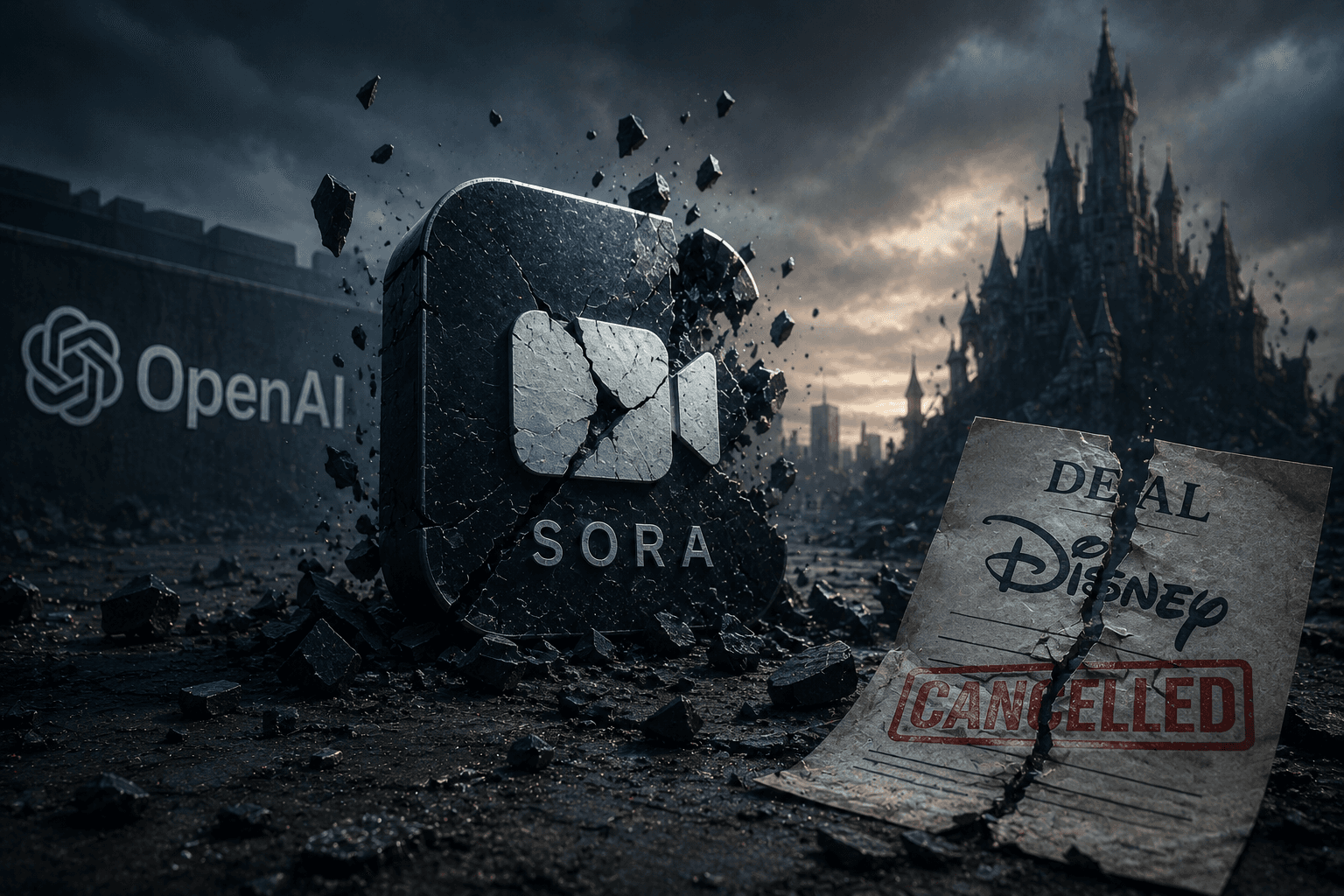
Sora Is Dead: OpenAI Kills Its AI Video App (And the Disney Deal Collapses)
On March 24, 2026, OpenAI shut down Sora - the video generation app it launched just 6 months ago. $15 million per day in costs, $2.1 million in total revenue, $1 billion Disney deal gone. The complete post-mortem.
30-second takeaway
Neuriflux summary: Sora Is Dead: OpenAI Kills Its AI Video App (And the Disney Deal Collapses) — value depends less on the creative promise than on output consistency, cost per video, and production time saved.
- Content type: Video · news.
- What you get: a fast read on use cases, limits, alternatives, and decision points.
- Quick verdict: Worth watching, but with caution: in AI, a big announcement should always be confirmed by real-world use.
- Editorial score: 8.8/10, adjusted to the topic instead of copied across articles.
What happened on March 24, 2026
The announcement came without warning. On March 24, 2026, OpenAI posted a brief message on X: "We're saying goodbye to Sora. To everyone who created with Sora, shared it, and built community around it: thank you." No detailed explanation. No specific shutdown date. Just a farewell.
Six months after its celebrated launch, Sora - the AI video generation app OpenAI had positioned as "the most powerful imagination engine ever built" - was gone. And it took with it a billion-dollar deal with Disney and the credibility of one of the most hyped product launches in recent AI history.
For those watching the numbers, the end wasn't entirely surprising. For the 9.6 million users who had downloaded the app and the creators who had built their workflows around it, the shock was real. Here's the complete post-mortem.
The timeline: from hype to shutdown
Understanding Sora's death requires tracing how quickly the product moved from promise to disappointment.
February 2024: OpenAI unveils Sora as a demo. Text-to-video clips flood the internet. Runway, Pika, and Kling suddenly look outdated. The promise is total - Sam Altman describes it as "a window into the real world for AI."
December 2024: Sora becomes available to ChatGPT Plus ($20/month) and Pro ($200/month) subscribers. But the rollout is chaotic - overloaded servers, waitlists, and quality that falls short of the demos that had generated so much exment. Ten months of limited access had given competitors time to catch up.
September 30, 2025: Sora launches as a standalone iOS and Android app. The concept: an AI-native TikTok - a vertical video feed of generated content, with a "characters" feature letting users scan their face to appear in videos. Within 24 hours, the app tops the US App Store charts in Photo & Video.
November 2025: peak downloads hit 3.3 million in a single month. Then the decline begins.
December 2025: Disney announces a landmark deal - a $1 billion investment in OpenAI and a 3-year license giving Sora access to over 200 Disney, Marvel, Pixar, and Star Wars characters. It is framed as a turning point for the industry. It will never close.
January 2026: downloads fall 45%. The novelty has worn off.
February 2026: 1.13 million downloads - a 66% collapse from the November peak. Daily active users are down 34%.
March 24, 2026: shutdown announced. Disney simultaneously exits the deal. The agreement had never been formally executed - no money had ever changed hands.
The numbers: an economic catastrophe
The Sora story is, at its core, a story about math that never worked.
Generating a 10-second video with Sora cost OpenAI approximately $1.30 in compute, according to analysts at Cantor Fitzgerald. Bill Peebles, Sora's own head of product, addressed this publicly in October 2025 with unusual candor: "The economics are completely unsustainable right now." It is almost unheard of for a senior executive to say this about their own product while it's still live.
Multiply that per-clip cost by the millions of videos generated daily at peak usage, and Forbes estimated OpenAI was burning approximately $15 million per day just to keep the Sora infrastructure running - an annualized rate exceeding $5.4 billion.
Set against those costs: the app's total lifetime revenue from in-app purchases came to $2.1 million. That's less than 0.04% of estimated infrastructure costs.
| Metric | Figure |
|---|---|
| Cost per 10-second clip | ~$1.30 |
| Estimated peak infrastructure cost | ~$15M/day |
| Annualized estimate | ~$5.4 billion |
| Lifetime in-app revenue | $2.1 million |
| Total downloads | 9.6 million |
| Peak monthly downloads (Nov. 2025) | 3.3 million |
| Downloads in Feb. 2026 | 1.13 million (−66%) |
Why OpenAI shut down Sora: the real reasons
The closure of Sora wasn't caused by any single factor. It was the convergence of several pressures that had been building since the day the app launched.
1. Compute costs were simply untenable
Video inference requires orders of magnitude more GPU resources than text. At a moment when OpenAI is competing aggressively for compute capacity to power its GPT models and enterprise products, running thousands of H100s for a consumer video app was a luxury the company could no longer justify. Shutting down Sora frees up significant infrastructure that can be redirected toward products that actually generate revenue.
2. Growth had already collapsed before the announcement
Sora wasn't shut down because it stopped working. It was shut down because growth had already stopped. The November 2025 peak was followed not by consolidation but by free fall. For an app claiming to revolutionize video creation, the retention signals were alarming by early December - well before any official pivot was communicated.
3. The IPO changes everything
OpenAI is targeting a public offering in Q4 2026 at a valuation between $830 billion and $1 trillion. To attract institutional investors, the company needs to demonstrate financial discipline. A product burning $15 million per day while generating $2.1 million in total lifetime revenue is nearly impossible to explain in a prospectus. Shutting down Sora sends a clear signal to the capital markets: OpenAI is getting serious about unit economics.
4. Anthropic showed a different path
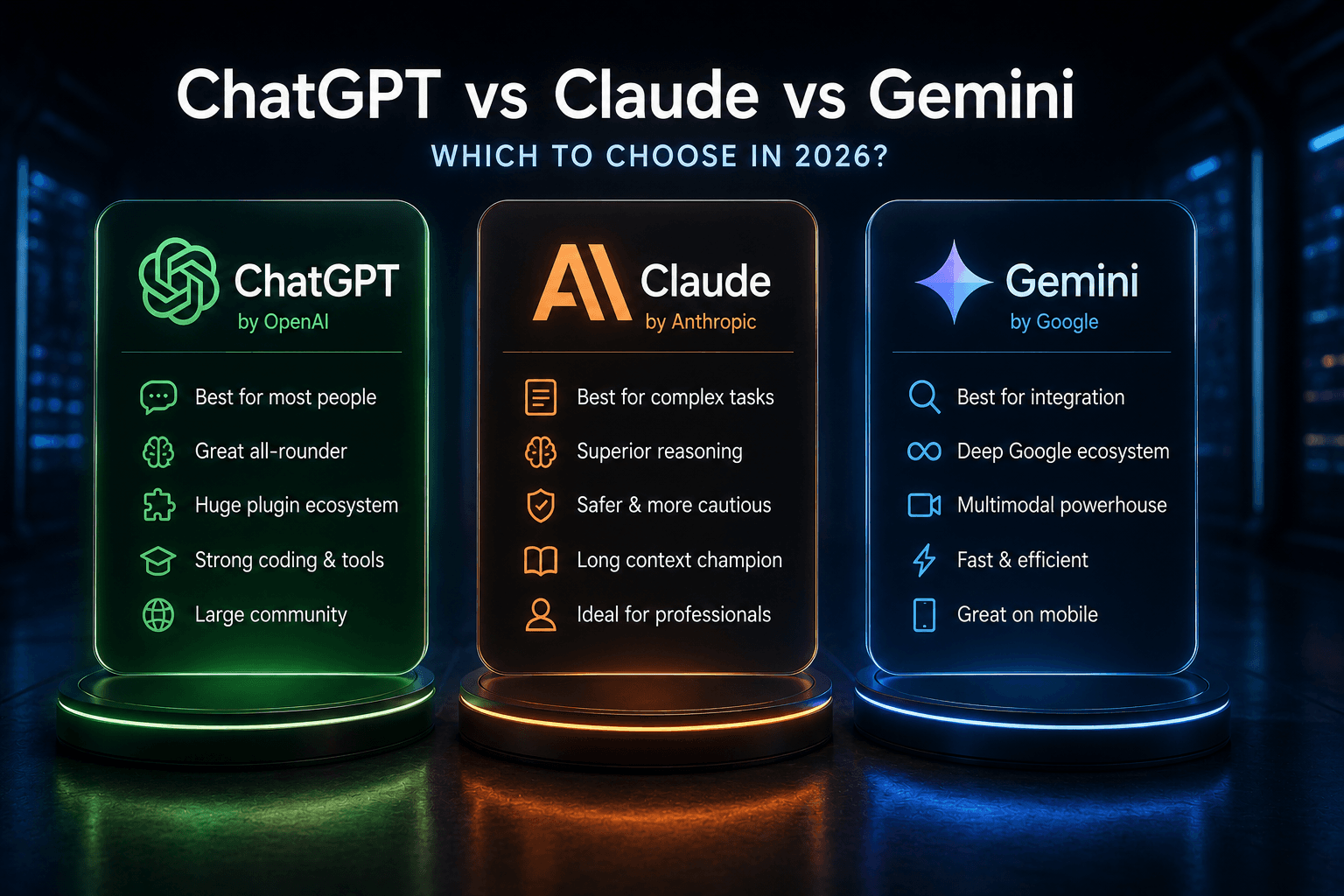
While OpenAI was spreading resources across Sora, DALL-E, web browsing, and a growing list of consumer features, Anthropic focused almost exclusively on Claude. The strategy paid off - Claude won major enterprise contracts and became the developer's assistant of choice. OpenAI clearly took notice.
5. Content moderation had become a serious legal liability
Within weeks of launch, Sora was being used to generate non-consensual deepfakes of public figures, pornographic content, and videos featuring copyrighted characters without authorization. OpenAI had to pause features and tighten moderation on an emergency basis. These incidents created accumulating legal risk at exactly the moment the company is preparing for the financial scrutiny that comes with going public.
The Disney collapse
The Disney deal deserves its own section - because it illustrates how quickly AI industry strategies can reverse.
In December 2025, the partnership appeared to be a definitive validation of Sora. Disney - the company most famous for aggressively defending its intellectual property - was not just licensing its most valuable characters to an AI consumer app, but investing $1 billion in OpenAI. The deal included plans to integrate Sora-generated content directly into Disney+.
Three months later, it was over. Disney's tech team reportedly learned of OpenAI's strategic pivot on the evening of March 23, 2026 - the night before the public announcement. No money had changed hands; the agreement had never been formally closed.
Disney's public statement was diplomatically worded: "As the nascent AI field advances rapidly, we respect OpenAI's decision to exit the video generation business and to shift its priorities elsewhere." According to multiple sources d by The Hollywood Reporter, the surprise inside Disney was considerable.
Read next
These articles are the best follow-up to what you are reading.
What this reveals about the AI industry
Sora's death isn't just another Silicon Valley footnote. It's a warning signal for the entire consumer AI generation space.
Consumer-scale video generation is not yet economically viable. Video inference costs are structurally incompatible with consumer-friendly pricing. If OpenAI - with $40 billion raised and a $730 billion valuation - can't make Sora profitable, who can?
Virality does not equal retention. Sora broke download records. It outpaced ChatGPT's initial adoption speed. But users left as fast as they arrived once the novelty faded. A million downloads in five days is worthless if Day-30 retention is in the low single digits.
Consumer AI platforms carry real risk. The millions of creators who built workflows around Sora, invested time learning its quirks, and built audiences around their Sora content found themselves without a tool overnight. With insufficient notice and no clear migration plan. Trust in consumer AI platforms has taken a measurable hit.
The alternatives: who fills the gap?
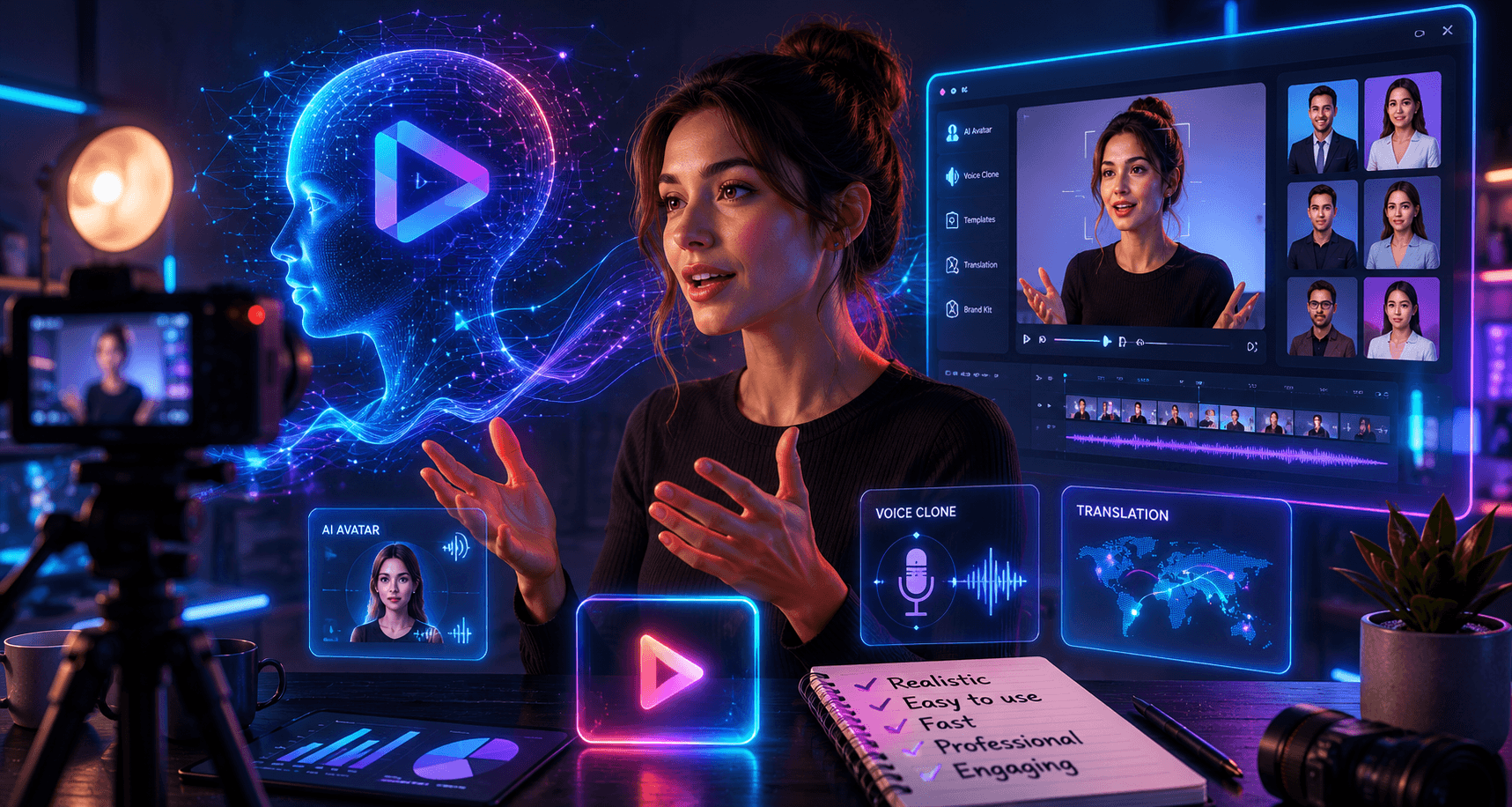
Sora's closure does not end AI video generation - the market had already moved significantly while Sora was stagnating. Here's where things stand in March 2026:
Runway Gen-4 - the quality benchmark
Runway is now the reference standard for professional AI video. Gen-4, released in January 2026, solves the core weakness of previous generative video models: temporal inconsistency, where subjects change appearance and motion artifacts appear between frames. For advertising, pre-visualization, and narrative content, Runway leads.
Pricing: from $12/month. Stable, mature API available. Best for: professional creators, high-quality production, VFX.
Kling 3.0 (Kuaishou) - best value
Developed by Chinese tech giant Kuaishou, Kling quietly caught up to and in several areas surpassed Sora. Kling 3.0 produces Runway-comparable quality at roughly 40% of the cost per second of video. Its key advantage: duration - up to 3 minutes per clip. Generous free tier with 66 daily credits.
Pricing: free tier available. Paid from ~$10/month. Best for: high-volume creators, social content, value.
Google Veo 3 - the only 4K native option
Google is now, per The Hollywood Reporter, the only player in AI video with genuine scale. Veo 3 is the only consumer model to output native 4K video. It integrates directly with Google Drive, YouTube Studio, and Google Ads - a significant workflow advantage for teams already in the Google ecosystem.
Pricing: accessible via Google One subscriptions. API via Gemini. Best for: enterprise teams in Google ecosystem, high-resolution content.
Pika 2.5 - fastest for social content
Pika doesn't try to make cinema. It tries to make the perfect TikTok clip in under 30 seconds. On short-form social videos, it's 3 to 5 times faster than Runway or Kling for quality that's often entirely sufficient. The free tier with 80 credits is enough to test it seriously.
Pricing: 80 free credits. Paid from $8/month. Best for: short-form social, speed, beginner creators.
Seedance 2.0 (ByteDance) - the open-source option
ByteDance's open-weights play in AI video. Seedance distinguishes itself with character consistency across multiple scenes - a weakness in most competing tools. Accessible directly in-browser with a free tier.
Pricing: free tier available. Per-second-of-output pricing. Best for: content with recurring characters, stylized animation.
| Tool | Quality | Speed | Monthly price | Best use case |
|---|---|---|---|---|
| Runway Gen-4 | ⭐⭐⭐⭐⭐ | ⭐⭐⭐ | $12+ | Pro, advertising, VFX |
| Kling 3.0 | ⭐⭐⭐⭐⭐ | ⭐⭐⭐⭐ | Free / ~$10+ | Volume, social |
| Google Veo 3 | ⭐⭐⭐⭐⭐ | ⭐⭐⭐ | Google One | 4K, enterprise |
| Pika 2.5 | ⭐⭐⭐⭐ | ⭐⭐⭐⭐⭐ | Free / $8+ | Short social, speed |
| Seedance 2.0 | ⭐⭐⭐⭐ | ⭐⭐⭐⭐ | Free / ~$5+ | Characters, animation |
What's next: OpenAI's "Spud" project
OpenAI isn't entirely abandoning the video space. According to the company, the Sora research team continues working on "world simulation research" - physical world modeling with robotics applications. A new model in development, internally codenamed "Spud", is reportedly positioned as a B2B productivity tool rather than a consumer product.
Sam Altman has teased an upcoming model that will "really accelerate the economy" without sharing specifics. The signal is clear: whatever OpenAI builds next in video will be enterprise-oriented, not consumer-facing.
What is certain: ChatGPT will no longer generate video from text prompts, and the Sora API will be cut off. Developers who had integrated Sora into their applications need to migrate.
Our verdict: what to take away
Sora wasn't a bad product. It was an extraordinarily expensive product to operate, launched into a market that wasn't prepared to pay what it actually cost, by a company that had bigger battles to fight elsewhere.
The lesson for users: don't build critical workflows around consumer AI platforms without evaluating their economic sustainability. Sora had the warning signs - inference costs structurally incompatible with affordable pricing, growth collapsing in the second month, no clear business model. The shutdown was foreseeable for anyone reading the numbers.
For creators looking for an immediate replacement: Kling 3.0 is our top recommendation for most use cases - excellent quality-to-price ratio, generous free tier, stable API. Runway Gen-4 for professional-grade requirements. Pika 2.5 for fast social content.
The Sora era closes in six months. The AI video era is just getting started.
FAQ
Is Sora permanently shut down?
Yes. OpenAI announced the closure on March 24, 2026. The app has been removed from the App Store, the API will be cut off, and sora.com will go offline. The company has promised details on timelines and content preservation options.
Is the Disney deal really cancelled?
Yes, both parties confirmed the deal will not proceed. Disney stated it "respects OpenAI's decision to exit the video generation business." None of the announced $1 billion ever changed hands - the agreement had never been formally executed.
Why did OpenAI shut down Sora so quickly?
Infrastructure costs estimated at $15 million per day were unsustainable against lifetime revenues of $2.1 million. With an IPO targeting Q4 2026, OpenAI needs to demonstrate financial discipline to institutional investors. The company is reallocating compute resources toward more profitable B2B products.
What is the best Sora alternative in 2026?
For professional quality: Runway Gen-4. For value: Kling 3.0. For fast social content: Pika 2.5. For teams in the Google ecosystem: Veo 3. For character consistency and animation: Seedance 2.0.
Will OpenAI launch another video generation tool?
Possibly, under the codename "Spud," but aimed at enterprise productivity rather than consumers. Sam Altman has mentioned a model that will "really accelerate the economy" without further detail. No launch date has been announced.
Neuriflux verdict
Our take: Sora Is Dead: OpenAI Kills Its AI Video App (And the Disney Deal Collapses) matters because value depends less on the creative promise than on output consistency, cost per video, and production time saved.
Detailed Neuriflux score
- Visual quality : 8.8/10 — judge it on actually usable outputs.
- Production speed : 9/10 — strong advantage for fast concept testing.
- Creative control : 7.5/10 — still inconsistent depending on the scene.
- Budget risk : Medium to high — video credits disappear quickly.
Who is it actually useful for?
- short-form creators
- marketers testing many variants
- teams producing visuals without a studio
Avoid it if...
- you need consistent cinema-grade quality
- you need perfect character control
- video credits can quickly exceed your budget
Why this score?
We do not rate only popularity or marketing promises. The score reflects practical value, maturity, real limitations, potential cost, and long-term relevance for a Neuriflux reader.
> Neuriflux signature — The goal is to separate what is genuinely useful from what is merely well presented. Worth watching, but with caution: in AI, a big announcement should always be confirmed by real-world use.
Method and reliability
This article is designed as a living resource. Prices, features, and market positions can change quickly in AI; when a detail depends directly on a vendor, plan, or recent announcement, always check the official page before making a final decision.
Last editorial check: March 28, 2026.
 97% match
 88% match97% match
 85% match
 97% match
 93% match
 84% match
 85% match
 95% match
 86% match
 94% match
 87% match
 85% match
 94% match
 85% match